
By Ruia Associates
Stalking is often misunderstood as harmless persistence or a passing nuisance. The law sees it very differently. Repeated, unwanted contact that causes fear or distress is a recognised criminal offence — and victims have clear legal remedies available to them. At Ruia Associates, we believe that awareness is the first line of defence. This post explains what stalking means in the eyes of the law, what your rights are, and the practical steps you should take if you find yourself targeted.
What Counts as Stalking?
Stalking is not defined by a single act but by a pattern of behaviour. It typically involves repeated, unwanted attention directed at a specific person that would cause a reasonable individual to feel alarmed, harassed, or fearful for their safety. This can take many forms, including:
- Following or showing up uninvited at someone’s home, workplace, or regular haunts
- Persistent phone calls, text messages, emails, or social media contact after being asked to stop
- Monitoring a person’s movements, online activity, or communications
- Sending unwanted gifts, letters, or messages
- Spreading information or making contact through third parties
The common thread is repetition and the absence of consent. A single unwelcome message may not meet the threshold, but a sustained course of conduct very often does.
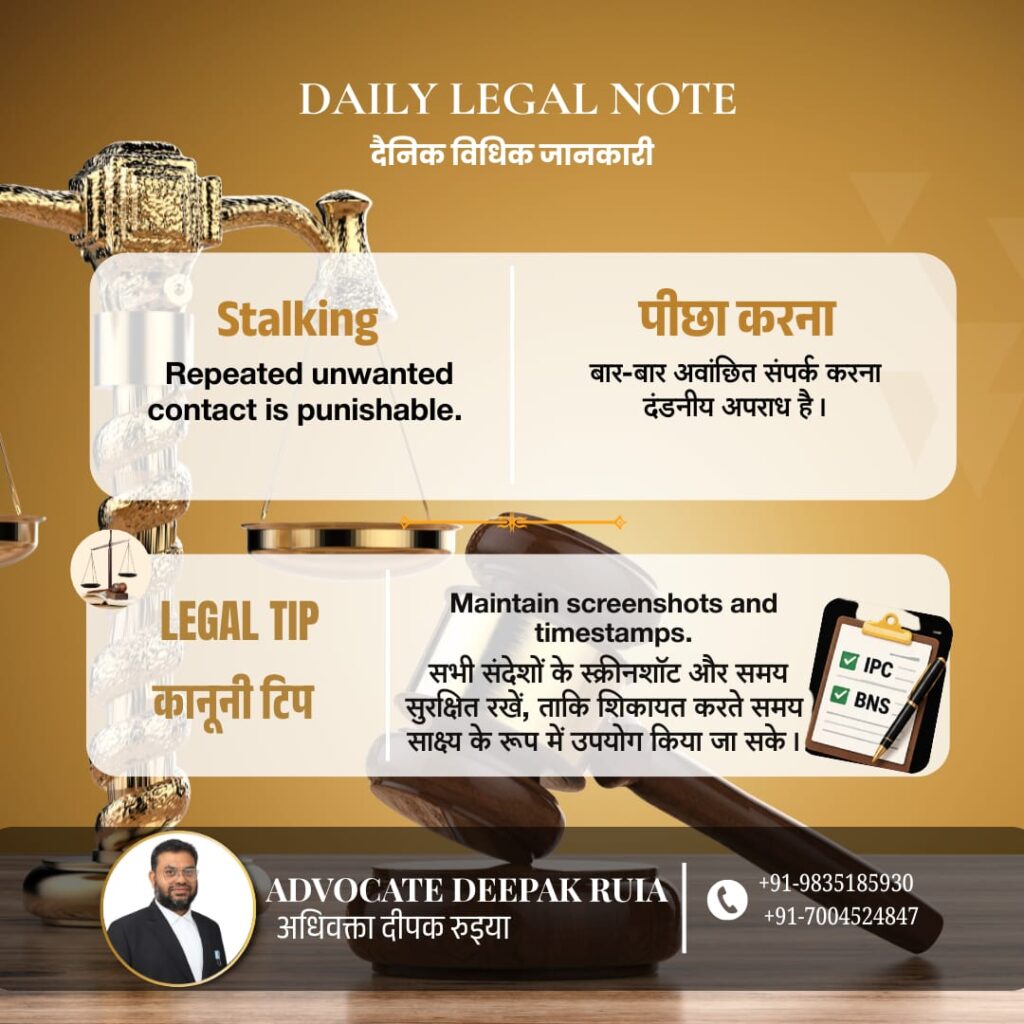
Repeated Unwanted Contact Is Punishable
The key legal principle is straightforward: persistence is not a defence — it is frequently the offence itself. When someone continues to contact, follow, or monitor another person after being told their attention is unwelcome, that conduct can attract criminal liability.
In India, stalking is specifically recognised under criminal law, including provisions addressing the act of a person who follows or contacts another, or attempts to contact them, to foster personal interaction repeatedly despite a clear indication of disinterest. Cyberstalking — monitoring or contacting someone through digital and electronic means — is treated with equal seriousness. Penalties can include imprisonment and fines, and consequences typically escalate for repeat offences.
Because the law and its application can vary by jurisdiction and by the specific facts of each case, anyone facing this situation should seek advice tailored to their circumstances.
Legal Tip: Preserve Your Evidence
If you are being stalked, the single most valuable thing you can do — beyond ensuring your immediate safety — is to document everything.
- Take screenshots of every message, call log, email, comment, and social media interaction. Capture the sender’s details, the content, and the platform.
- Record timestamps. The date and time of each incident establishes the pattern and frequency that the law looks for. A timeline is often more persuasive than any single message.
- Keep a written log. Note in-person sightings, unexpected appearances, and any third-party contact, along with where and when they occurred.
- Do not delete anything, even content that feels distressing. Deleted material can be difficult or impossible to recover and may weaken your case.
- Back up your records to a secure location, such as cloud storage or a device the other person cannot access.
This evidence transforms a series of isolated, deniable incidents into a documented course of conduct — exactly what investigators and courts need to act.
What to Do Next
If you believe you are being stalked, consider taking these steps:
- Prioritise your safety. If you feel you are in immediate danger, contact the police without delay.
- Tell someone you trust. Friends, family, or colleagues can offer support and serve as witnesses.
- Report to the authorities. File a complaint with the police, bringing your documented evidence with you. For online harassment, cybercrime reporting channels are available.
- Seek legal counsel. A lawyer can advise you on protective orders, restraining options, and the strongest path forward for your specific situation.
How Ruia Associates Can Help
No one should have to navigate harassment or fear alone. At Ruia Associates, we assist clients in understanding their rights, preserving evidence effectively, approaching the appropriate authorities, and pursuing the legal protections available to them. If you or someone you know is dealing with stalking or harassment, reach out to us for confidential, professional guidance.
This blog post is intended for general informational purposes only and does not constitute legal advice. Laws and their application vary by jurisdiction and individual circumstances. Please consult a qualified legal professional for advice specific to your situation.
Leave a Reply