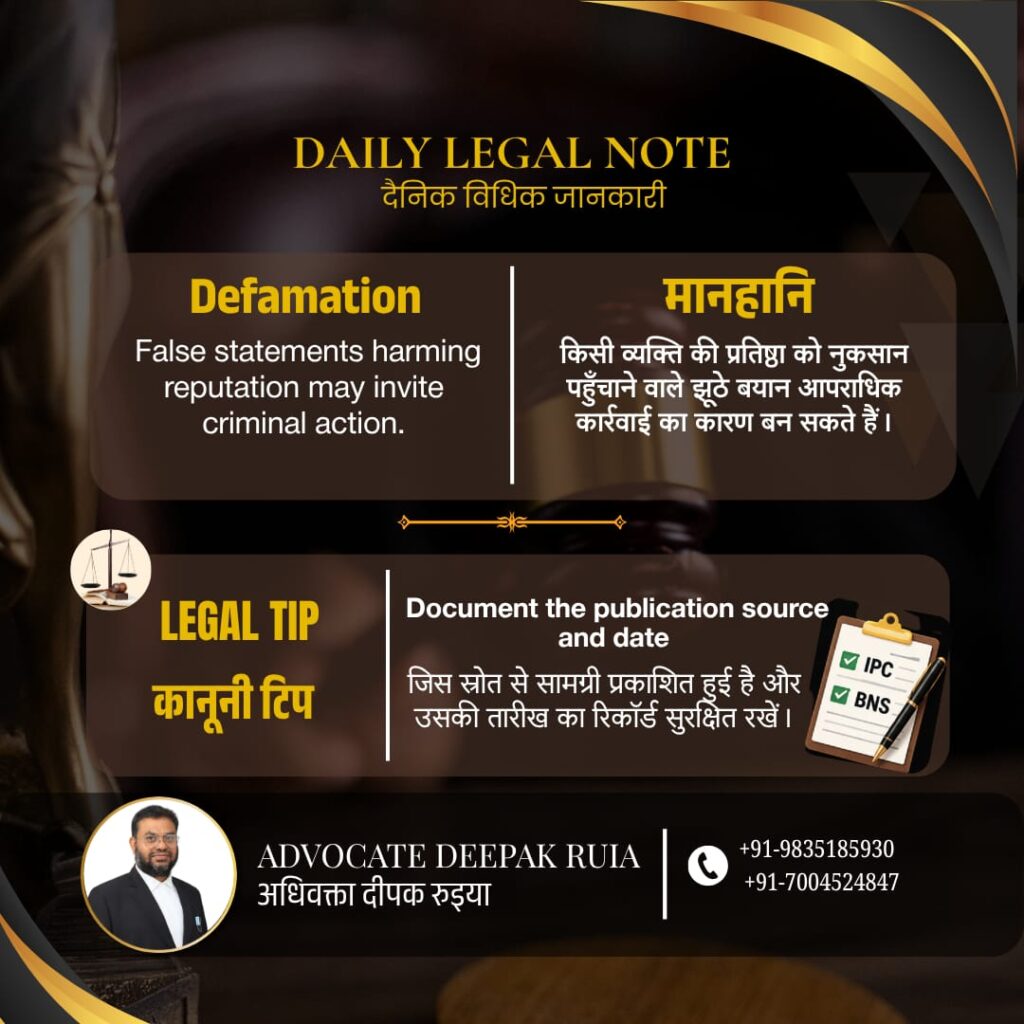

Understanding Defamation and Your Legal Rights
Reputation is one of a person’s most valuable assets. In today’s digital world, false allegations, misleading social media posts, fabricated news, and defamatory comments can spread rapidly and cause serious personal and professional harm. Indian law recognizes the importance of protecting an individual’s reputation and provides legal remedies against defamatory statements.
If a person intentionally publishes false information that damages another person’s reputation, such conduct may give rise to legal consequences.
What is Defamation?
Defamation refers to the act of making or publishing false statements about a person that harm their reputation in the eyes of society, colleagues, customers, friends, or family members.
A defamatory statement may:
- Lower a person’s social standing.
- Damage professional credibility.
- Harm business interests.
- Expose a person to hatred, ridicule, or contempt.
- Affect personal relationships and public image.
Both written and spoken statements can amount to defamation depending upon the facts and circumstances of each case.
Common Forms of Defamation
Defamation can occur through various mediums, including:
Social Media Posts
False accusations shared on Facebook, Instagram, X (Twitter), LinkedIn, or WhatsApp.
News Articles and Publications
Publishing incorrect information that harms the reputation of an individual or organization.
Emails and Messages
Circulating false allegations through email chains or messaging platforms.
Videos and Interviews
Making defamatory remarks during public speeches, podcasts, or online videos.
Business and Professional Disputes
Spreading false information about competitors, employees, or former associates.
Online Defamation is Increasing
With the rise of digital communication, online defamation has become increasingly common. A single false post can reach thousands of people within minutes and may continue to circulate even after deletion.
Digital evidence plays a crucial role in proving defamatory conduct. Therefore, victims should preserve all available records.
Legal Tip for the Public
Document the publication source and date.
If you become a victim of defamation, immediately preserve evidence such as:
✔ Screenshots of posts or messages
✔ URLs or website links
✔ Copies of emails and publications
✔ Newspaper articles or online news reports
✔ Date and time of publication
✔ Names of individuals involved
✔ Witness statements, if available
Maintaining proper records helps establish when and where the defamatory material was published.
Legal Remedies Available
Depending on the circumstances, a person affected by defamation may:
- Initiate criminal proceedings where applicable.
- Seek appropriate legal remedies under the law.
- Demand removal of defamatory content.
- Preserve evidence for investigation and litigation.
- Protect business reputation and personal interests through legal action.
The appropriate remedy depends upon the nature of the statement, the extent of publication, and the facts of the case.
Importance of Early Legal Consultation
Many people ignore defamatory statements, assuming they will disappear over time. However, online content can remain accessible for years and may continue to damage reputation.
Seeking legal advice at an early stage can help:
- Assess whether the statement amounts to defamation.
- Preserve evidence properly.
- Identify the responsible parties.
- Protect personal and business reputation.
- Avoid procedural delays.
Conclusion
False statements that harm a person’s reputation can have serious consequences. Whether the defamation occurs through social media, newspapers, emails, videos, or other publications, preserving evidence and taking timely legal advice are essential.
If you have been affected by defamatory content or require guidance regarding reputation-related disputes, professional legal assistance can help you understand your rights and the remedies available under Indian law.
Ruia Associates provides legal assistance in matters relating to defamation, reputation management, criminal complaints, cyber-related disputes, and litigation. Consult an experienced legal professional for advice based on your specific circumstances.
Disclaimer: This blog is for general legal awareness only and should not be treated as legal advice. For any specific case, consult a qualified lawyer.
Leave a Reply